
Hard-Rock Water Bore Drilling Services
Accessing groundwater in the Perth Hills requires equipment and experience suited to hard-rock conditions. Unlike the sandy soils found across parts of the coastal plain, many properties throughout the hills are located over granite and other fractured-rock formations.
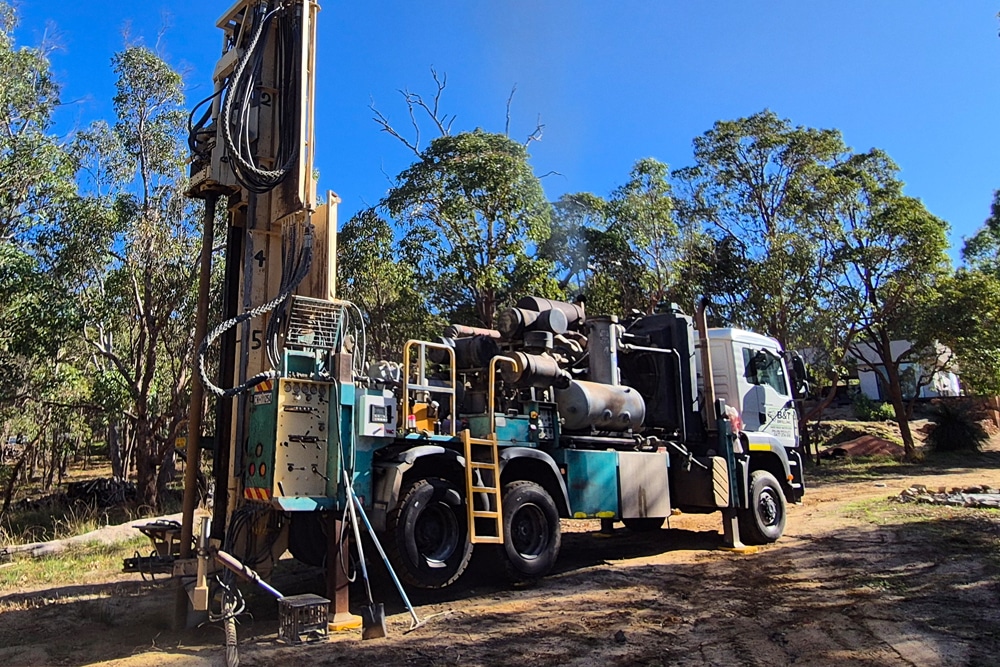
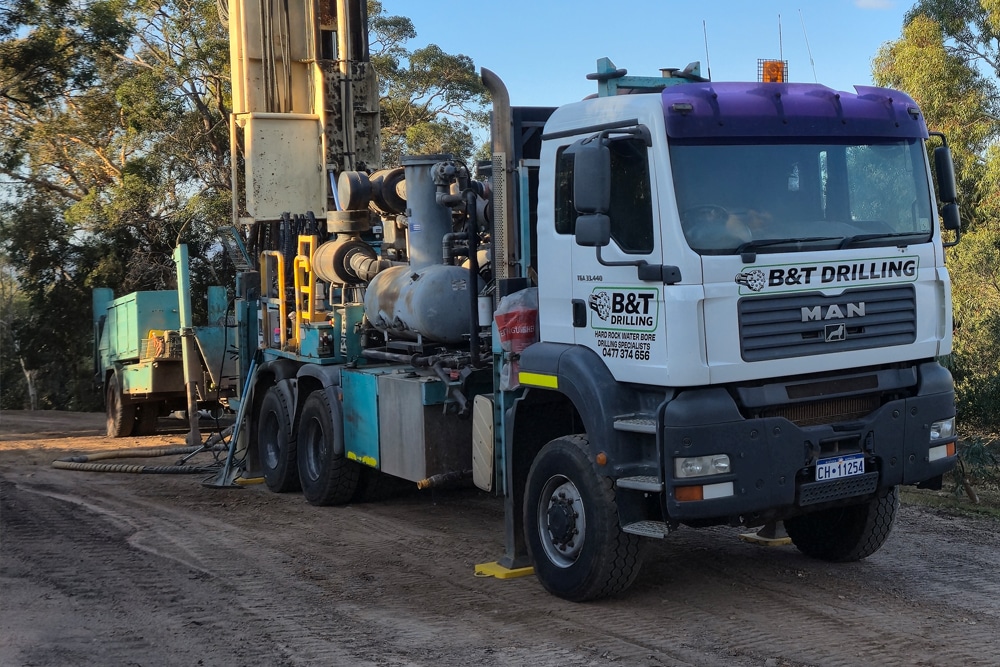
B&T Drilling specialises in drilling through these challenging ground conditions. Our truck mounted rigs are designed for hard-rock water bore drilling while remaining suitable for access on rural properties and larger residential blocks.
Every property is different, and groundwater cannot be guaranteed before drilling. We use available groundwater records, surrounding bore information, geological conditions and our own drilling experience to help identify a suitable location and plan the work.
Our objective is to construct the bore properly, document the conditions encountered and provide the information required for appropriate pump selection and ongoing bore management.
Our Approach To
Hard-Rock Water Bore Drilling
A successful drilling project requires practical experience, reliable machinery and careful planning.
Before mobilising, we discuss the property, access conditions, intended water use and any available information about nearby bores. We also consider the position of buildings, fences, powerlines, underground services, septic systems and other site features that may affect the proposed drilling location.
Because hard-rock drilling can represent a significant investment, we provide clear information about the process, likely drilling conditions, pricing structure and the uncertainties involved before work begins.
Once on site, our crew works carefully to establish a safe operating area and minimise unnecessary disturbance to the surrounding property. Throughout drilling, we monitor the formations encountered, groundwater inflows and bore performance to help determine the most appropriate course of action.


How We Work
Site Assessment and Bore Siting
Before the drilling rig is mobilised, we assess the proposed location and review available groundwater and geological information.
This may include nearby bore records, regional groundwater data, our own drilling history and an inspection of the property. Where requested, an experienced water diviner may also be involved in the site-selection process.
No assessment or bore-siting method can guarantee that groundwater will be found or predict its final yield or quality. The purpose of this process is to identify a practical drilling location based on the information available.
Mobilisation and Setup
Our truck-mounted drilling rig and support equipment are mobilised to the property and positioned on a suitable, accessible area.
Before setup, we consider overhead and underground services, buildings, gates, fences, vegetation, drainage and the space required to operate safely. We take reasonable care to minimise unnecessary disturbance, although access by heavy vehicles may leave some impact on soft or wet ground.
Hard-Rock Drilling
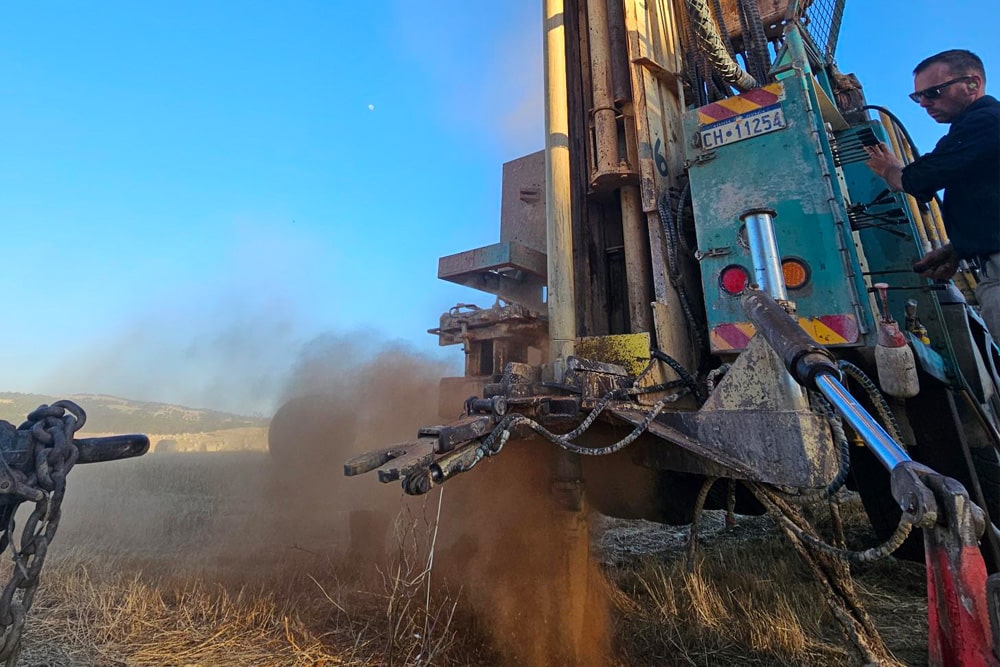
We use pneumatic down-the-hole hammer drilling equipment to advance through granite and other hard-rock formations.
During drilling, our crew monitors changes in geology, groundwater inflows, drilling depth and airlift performance. These observations help guide decisions as the bore progresses.
The final drilling depth depends on the ground conditions and water encountered. Any decision to continue or stop drilling is discussed with the client where practical, particularly when drilling moves beyond an estimated or nominated depth.
Casing and Bore Development
The bore is constructed using casing selected to suit the conditions encountered and the intended bore design. Depending on the geology, this may include PVC or steel casing and appropriately positioned screened or slotted sections.
Once drilling and construction are complete, the bore is developed using compressed air to remove loose material and sediment from the hole. Development continues until the bore has been adequately cleaned based on the conditions encountered.
We then record the bore depth, geological formations, groundwater inflows and measured airlift flow. This information is provided to assist with pump selection, although the long-term performance and water quality of a bore may vary over time.
Hard-Rock Water Bore Drilling
Essential Questions Answered